

Categories: Health
Everyday Impact of Brain Health
A thriving brain lets you effortlessly remember a grandchild’s birthday, navigate new technology without frustration, or bounce back from setbacks with clear-headed optimism. When brain health falters, simple tasks become overwhelming, relationships strain under forgetfulness, and vulnerability to depression or dementia rises, robbing years of quality life.[2]
Core Metrics Simplified
These measurable aspects of brain health—memory retention, neuroplasticity, and degenerative disease risk—serve as clear benchmarks for assessing cognitive vitality today and tracking progress over time. They reflect underlying biological processes that respond to lifestyle choices, offering practical ways to monitor improvements and prioritize interventions that yield real-world benefits like sharper recall or greater mental flexibility.[3]
Memory Retention
Memory retention refers to the brain’s ability to hold onto and retrieve information effectively, from short-term details like a grocery list to long-term knowledge such as life experiences or professional skills. The hippocampus, a seahorse-shaped structure deep in the brain, serves as the primary hub for forming and storing these new memories, converting fleeting impressions into enduring knowledge. Healthy habits support its function by promoting the release of growth factors that strengthen neural connections, ensuring reliable recall for work, relationships, and daily independence; when impaired, everyday forgetfulness creeps in, signaling early risks for broader cognitive challenges, but targeted changes can rebuild its volume and efficiency over time.[4]
Damage from stress, poor sleep, or inflammation shrinks the hippocampus, mimicking early dementia symptoms and accelerating age-related loss. Studies show that consistent aerobic exercise or enriched learning environments can reverse this shrinkage, restoring memory performance even in midlife.[4]
Neuroplasticity
Neuroplasticity refers to the brain’s remarkable capacity to reorganize itself by forming new synapses, strengthening existing pathways, or even generating fresh neurons in areas like the hippocampus. This flexibility underpins learning a new language, adapting to injury, or mastering a skill later in life, driven by proteins like BDNF that act as molecular “scaffolding” for change. Without it, the brain becomes rigid, struggling with novelty and recovery, but practices like skill-building or mindfulness reliably enhance this rewiring, fostering resilience across the lifespan.[5]
Factors such as chronic stress or isolation suppress plasticity by disrupting synaptic pruning and growth signals, while positive interventions like exercise or social interaction amplify it, creating denser, more efficient networks.[5]
Degenerative Disease Risk
This metric gauges the buildup of pathological changes—like amyloid plaques, tau tangles, or vascular lesions—that silently precede Alzheimer’s and other dementias, often decades before symptoms emerge. Early detection through biomarkers or lifestyle tracking allows prevention by targeting inflammation, oxidative stress, and metabolic health that fuel these processes. Lowering this risk preserves neuron integrity and connectivity, delaying or averting clinical decline and maintaining full cognitive function.[6]
Modifiable factors like diet, exercise, and blood pressure control directly influence these mechanisms, with combined strategies shown to reduce dementia incidence by up to 40% in population studies.[6]
Preview of the Seven Pillars
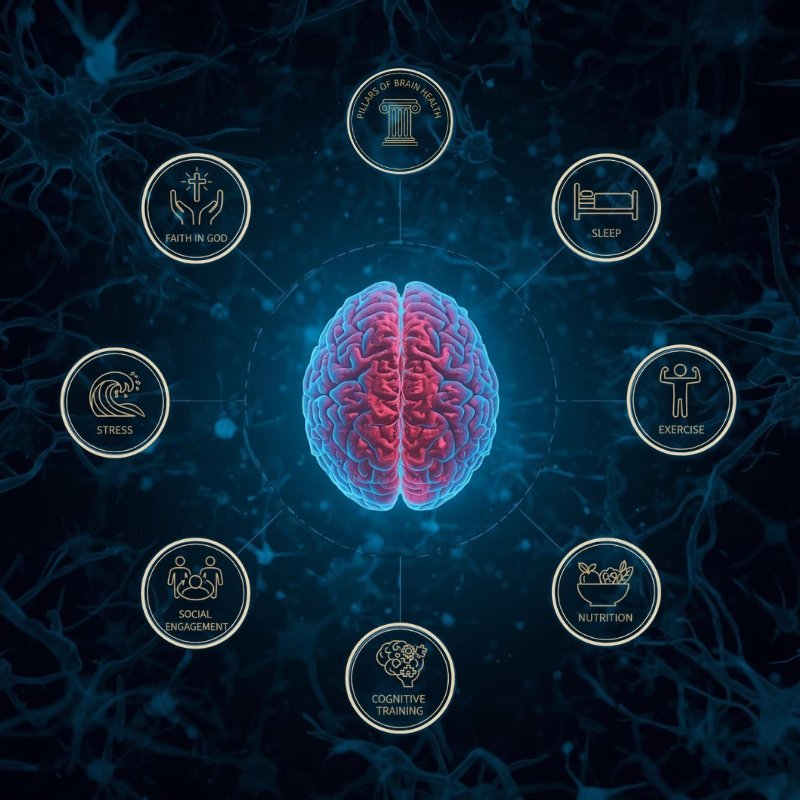
This series dives into seven research-backed strategies, each enhancing memory, plasticity, and disease resistance with actionable insights.
- Sleep: Quality rest of 7-9 hours nightly replays the day’s events during deep sleep to solidify memories, while the brain’s “glymphatic system” flushes out amyloid proteins linked to dementia. Poor sleep patterns erode hippocampal volume and speed decline, but establishing wind-down routines—like dim lights and no screens—revives focus and adaptability within weeks.[7]
- Exercise: Activities such as 30 minutes of brisk walking daily spike brain-derived neurotrophic factor (BDNF), a “fertilizer” that enlarges the hippocampus for superior memory and learning capacity. Beyond growth, it curbs inflammation, improves circulation, and slashes dementia risk by 30-50% per major studies, making movement a simple yet profound shield for long-term cognition.[8]
- Nutrition: Foods packed with berries, leafy greens, nuts, and omega-3-rich fish battle oxidative stress and inflammation that age neurons prematurely. The MIND diet, merging Mediterranean and DASH approaches, shows up to 53% reduced Alzheimer’s rates in followers, proving targeted eating sustains clarity and vitality over years.[9]
- Cognitive training: Engaging in puzzles, foreign languages, or instruments triggers synaptic pruning and fresh neural links, fortifying cognitive reserve against future insults. Programs like dual n-back games yield measurable gains in speed and recall after consistent practice, turning mental workouts into a buffer for aging brains.[5]
- Social engagement: Deep conversations and group activities light up emotional and executive brain networks, countering loneliness—which rivals smoking as a dementia trigger. Robust ties foster better problem-solving and mood stability, with research tying frequent interactions to 50% slower cognitive drop in later life.[10]
- Stress: Elevated cortisol from ongoing worry physically atrophies memory hubs, but techniques like deep breathing or journaling dial it back, safeguarding plasticity and new neuron formation. Mastering stress not only halves depression odds but sustains sharp thinking through chaos, as proven in longitudinal health data.[2]
- Faith in God: Regular prayer and worship activate brain reward centers, easing anxiety while instilling purpose that wards off decline. Midlife devotionals link to 50% less cognitive impairment risk, boosted further by faith communities offering connection and resilience.[11]
Your brain holds the key to a richer, more vibrant life—don’t let it fade without a fight. With the seven pillars ahead, from sleep’s nightly reset to faith’s enduring anchor, simple shifts can transform memory, flexibility, and resilience, turning potential decline into decades of clarity and purpose.
The Power in Your Hands
Imagine waking refreshed, tackling challenges with laser focus, cherishing connections without the fog of forgetfulness, and facing tomorrow with unshakeable optimism. Science shows these aren’t dreams but achievable realities: combined habits like those in this series slash dementia risk by up to 60%, while boosting daily joy and sharpness. You’ve seen the metrics—now harness the tools to own them.
Start Today, Thrive Tomorrow
Each upcoming article delivers not just facts, but step-by-step plans tailored for real life: wind-down rituals for sleep, walks that rebuild your hippocampus, meals fueling neuron repair, games sharpening recall, conversations defying isolation, breaths conquering stress, and prayers igniting purpose. Readers who commit report clearer thinking in weeks—join them by diving into sleep next, and watch your brain respond. Your future self awaits; the series begins now.
References
- NCBI – Prevention and Protective Factors
- NIA – Cognitive Health and Older Adults
- Mayo Clinic – Memory loss: 7 tips
- Mayo Clinic – Memory loss: 7 tips (Memory Retention)
- PMC – Innovative Approaches to Enhance Neuroplasticity
- Alzheimers.gov – Can I Prevent Dementia?
- Mayo Clinic – Tips to keep your brain healthy
- MindCrowd – Neuroplasticity and Exercise
- NIH – Healthy lifestyle traits reduce Alzheimer’s
- PBS – Lifestyle changes prevent dementia
- PMC – Prayer at Midlife and Cognitive Impairment